Academic Article · Traceability · Published
The Characterization of Gemstones and Gem-bearing Ore in Ratnapura District, Sri Lanka
- J.L.S.G. Weeralal1,
- K.A.D.K. Premarathne2,
- S. Piranavan3,
- S.N.C.B. Samarasinghe4,
- G.V.I. Samaradivakara5,
- H.M.R. Premasiri6
University of Moratuwa · National Gem and Jewellery Authority, Sri Lanka
Please contact the corresponding author to get access to the full paper.
*Corresponding author – gvis@uom.lk
Abstract
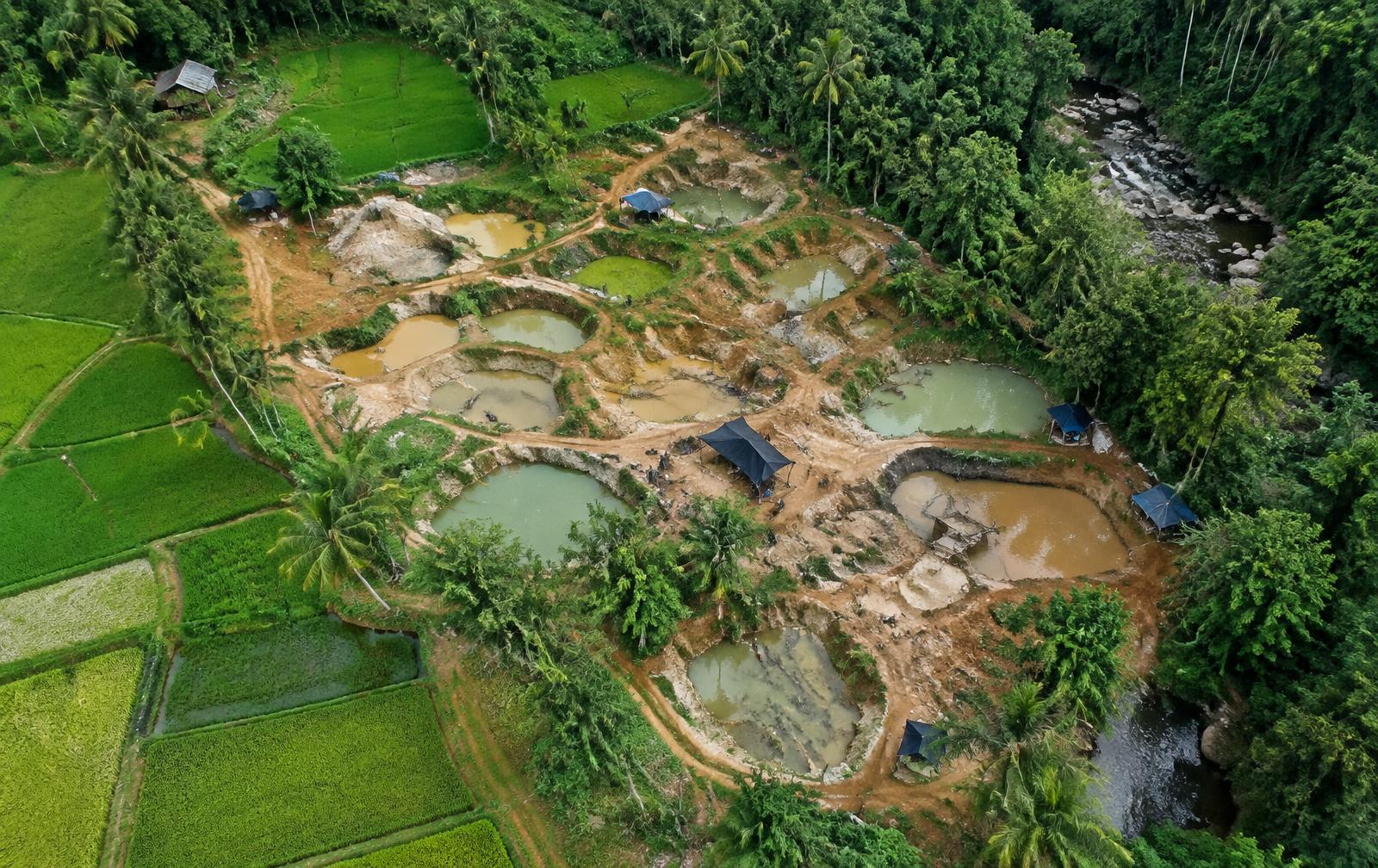
Sri Lanka, and specifically the Rathnapura District, has a rich, millennia-long history as a prolific source of diverse, high quality precious and semi-precious gemstones, which are primarily deposited in secondary alluvial environments formed through extensive weathering and erosion. The unique geologic environments of these deposits greatly affect both the physical and chemical characteristics of the gems and the host ores. The global gem market has increasingly sought transparency in recent years, and the exact origin of a gem stone is an important factor for certification, valuation and to be ethical about the stone’s origins. In Sri Lanka, the traditional knowledge, visual study and the subjective experience of the local miners and traders have been the only means to determine the localities from which these stones are deposited. This is an approach that has been used for centuries in this industry; however it is not scientifically precise and reproducible. Thus, a transition to strong scientific methods is needed that are able to accurately describe and distinguish gemstones and related source gravels by reliable geochemical markers specific to localities of deposition. To meet this need, the present study has conducted a detailed geochemical study in ten active gem open pit mine sites of the major gem producing regions in the Rathnapura district. Field investigations involved taking samples of Green Zircon and Pink Sapphire of known color, and also semi-precious gem-bearing ores from the mines and the duly discarded gravel washing material. The faceted gemstones were first gemologically verified with a refractometer, and then by non-destructive surface elemental analysis (SEM-EDX) in order to identify variations in major and trace element composition. At the same time, a representative bulk sample of the gem bearing ores were crushed in Tema mill and the particles finer than 63 µm were separated by sieving and subjected to partial acid digestion (aqua-rega) according to the standard ISO 11466. The leachable fractions were then analyzed by Inductively Coupled Plasma Optical Emission Spectroscopy (ICP-OES) for the presence of fifteen elements (seven major oxides and eight trace elements/rare-earth elements). Various chemical-distance matrices (Euclidean Distance) and statistical analytical methods such as Principal Component Analysis (PCA) were used to assess compositional gradients and possible correlations between the host ore chemistry and gemstones.SEM-EDX analysis showed that there were compositional gradients in the Green Zircon, with the impurities present varying from 4.5% to more than 12% and the Zr/Si atomic ratio was variable across the locality. Pink Sapphires were found to contain trace amounts of chromium and variable non-corundum impurities. In addition, ICP-OES of the gem-bearing ores showed some distinct mafic to ultramafic signatures (high Cr, V, Co) between localities, and a preliminary correlation between the iron in the zircon and the bulk ore Fe₂O₃. Signatures for provenance are quite clear in composition, but larger numbers of samples, complete ore digestion, and more sophisticated techniques for trace element analysis, such as LA-ICP-MS, will be required to establish definitive signatures.
- Gemstone provenance
- Geochemical characterization
- Gem-bearing ore
- SEM-EDX
- ICP-OES
Cite this publication
J.L.S.G. Weeralal, K.A.D.K. Premarathne, S. Piranavan, S.N.C.B. Samarasinghe, G.V.I. Samaradivakara, H.M.R. Premasiri (2026). The Characterization of Gemstones and Gem-bearing Ore in Ratnapura District, Sri Lanka. Academic Article. Gemstone Sustainability.org.
- Published
- September 2026
- Type
- Academic Article
- Institution
- University of Moratuwa · National Gem and Jewellery Authority, Sri Lanka
- DOI
- Pending